
Team makes technetium isotopes on existing cyclotrons in Ontario, BC
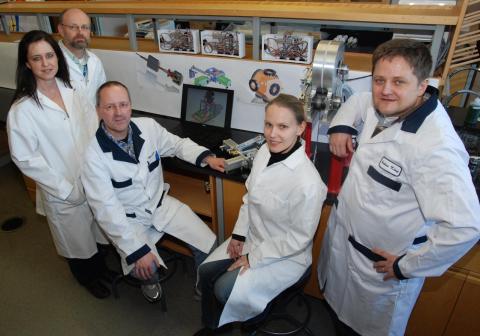
At a special session at the annual meeting of the American Association for the Advancement of Science, a team led by TRIUMF announced the successful production of the key medical isotope technetium-99m on cyclotrons already available in Ontario and British Columbia. This development allows hospitals and clinics with existing cyclotrons to make the isotope traditionally only available from nuclear reactors. The team includes TRIUMF, BC Cancer Agency, Lawson Health Research Institute, and the Centre for Probe Development and Commercialization.
Paul Schaffer, head of TRIUMF's Nuclear Medicine Division and one of the team leaders, said, "Making medical isotopes in hospitals instead of nuclear reactors is a major milestone for diagnostic imaging for patients in Canada and around the world. We took the principles of physics, chemistry, and engineering that people have known for years, and used them to write a recipe for upgrading a cyclotron so it could be used to make technetium-99m. We've just completed using that recipe on machines in both Ontario and BC."
Each year, tens of millions of medical procedures are conducted around the world with technetium-99m, an isotope used in radiopharmaceuticals for imaging disease in the heart, bones, and elsewhere in the body. Two ageing nuclear reactors produce about three quarters of the global supply; one of them is the NRU reactor in Chalk River. In the past few years, both reactors have suffered maintenance and repair outages, threatening the global supply of medical isotopes. The conventional technology with reactors also involves the use of highly enriched uranium.
Tom Ruth, senior scientist at TRIUMF and the BC Cancer Agency and principal investigator for the team said, "One of these cyclotrons can supply a metro area such as Vancouver and there are more than a dozen of these cyclotrons in hospitals across Canada. What we've shown is that a decentralized model for producing technetium is now possible. We are in discussions with several industrial partners and regional health authorities about how to start implementing this vision. The science and the technology are essentially ready."
"As this technology is rolled out across Canada, it will help hospitals save time and money, and reduce the wait that patients have been experiencing for critical diagnostic tests," added team member Francois Benard, BC Leadership Chair in Functional Cancer Imaging at UBC and senior scientist at the BC Cancer Agency.
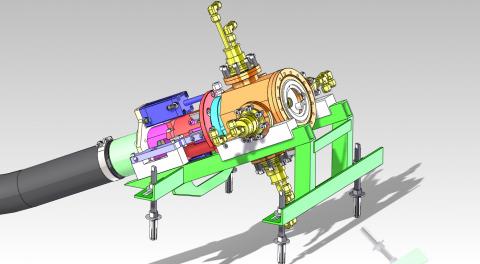
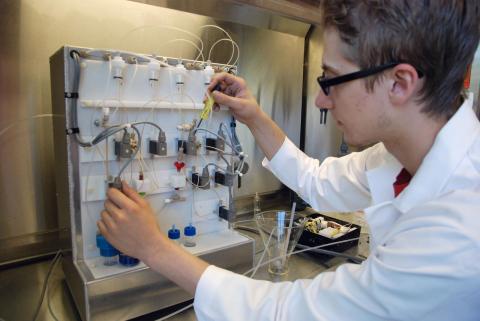
With early support from NSERC and CIHR and additional funding through NRCan's Non-reactor-based Isotope Supply Contribution Program, the TRIUMF-led team has succeeded in developing an alternative technology---one that makes use of existing cyclotron machines at Canadian hospitals and institutes across the country. The core of the technology includes preparing solid targets of molybdenum-100 and placing them in an automated system for irradiation with the cyclotron. The team developed these tools along with chemistry that isolates and purifies the technetium-99m.
Benard explained, "The goal was to develop a technical solution that would work for many people, not just one machine or one brand of machine. Our team has demonstrated that the existing and growing fleet of cyclotrons in Canada---which already make isotopes for PET imaging---can be successfully used to make high quality technetium-99m to diversify the supply of this isotope."
The team achieved a global first with the production of technetium on a GE cyclotron. Frank Prato, a member of the team and the director and founder of the Lawson Health Research Institute said, "It has been a delight to work with the entire team. We achieved a global first with the demonstrated production of technetium on a GE cyclotron. Almost half of the existing cyclotrons in the U.S. are GE machines."
For additional background and access to additional graphics, please see http://www.triumf.ca/nrcan-nisp.
The three talks from the AAAS Symposium are available online.
--based on a TRIUMF news release